
This collection contains book chapters authored by Cardozo Law faculty, including contributions to edited volumes and academic publications.
-

Sovereignty’s Trajectory Within the Bounds of Modern Democratic Constitutionalism
Michel Rosenfeld
This chapter explores the advantages and drawbacks of constitution-based sovereignty—i.e., sovereignty as designed in a modern democratic constitution and/or consistent with the four key pillars of such a constitution. These pillars are: 1) limitation of the powers of government; 2) adherence to the rule of law; 3) protection of fundamental rights; and 4) maintenance of an adequate level of democracy. Constitution-based sovereignty replaces the divinely prescribed sovereignty enjoyed by the absolute monarch with sovereignty by the people, the nation, or the state, or else all three of them.
Constitution-based sovereignty has been historically tied to the nation-state, and the first two parts of the chapter deal respectively with the theoretical and legal implications consistent with that. Part Three, on the other hand, addresses the question of whether constitution-based sovereignty can adapt in light of post-1945 developments that have weakened nation-state constitutionalism through multiplication of supra-national legal regimes. Do the establishment of the UN, universal and regional human rights regimes, globalization, the EU constitution-like multilateral treaties, and worldwide schemes of segmented regulation, such as that of the WTO, undermine constitution-based sovereignty? Or can the latter adjust through adaptation and reform? What about the more recent eruption of right wing populism and illiberalism that purport to abide by constitutional strictures while in fact dismantling them from within? Do these proliferating instances of populism and illiberalism foretell the death knell of constitution-based sovereignty? Or will they in the end amount to temporary deviations from constitution-based sovereignty ultimate post nation-state viability?
-

Shared Sovereignty and Shared Humanity in the Jewish Rabbinic Tradition: A Forgotten Tradition
Suzanne Last Stone
This chapter examines the evolution of the concept of sovereignty within the rabbinic tradition and its impact on understandings of the relationship between Jews and non-Jews, particularly following the establishment of the State of Israel.
-

Policy Recommendations and Ways Forward
Rachel Locke and Jocelyn Getgen Kestenbaum
This chapter discusses how the transformative ideas presented by the contributors can be applied in concrete and meaningful ways to policy, practice, and research. The chapter begins with a discussion of principles that were both crucial to the articulation of the recommendations and are similarly crucial to any proposal to address identity-based mass violence. The human-centered values of this volume demand a focus not only on outcomes but also on process, as these principles attest. The chapter then focuses on practical areas of action, from capacity building to funding to shifting narratives, and more. This chapter shifts from prescriptive policy solutions toward a way of thinking about policy that is more appreciative of the themes of identity, power, and space as a transformative, preventative agenda.
-

Illiberal Constitutionalism: Viable Alternative or Nemesis of the Modern Constitutional Ideal?
Michel Rosenfeld
Illiberal constitutionalism has spread recently in various parts of the world, raising the question of whether it is a viable alternative to its liberal counterpart or a pathway to authoritarianism. “Liberal” and “illiberal” are contested terms, and liberal constitutions are compatible not only with philosophical liberalism but also with republicanism, pluralism, and certain kinds of liberal communitarianism. Contemporary examples of illiberal constitutionalism fall into three different types: communal-based, such as the one in Singapore; populist-based, such as that in Orban's Hungary; and opportunistic, such as that invoked by Trump and Bolsonaro. Philosophically, illiberal constitutionalism works well with Karl Schmitt's anti-liberal and anti-pluralist political theology. Ultimately, unlike its communal-based counterpart, the populist kind of illiberal constitutionalism fails to conform with the four pillars deployed by liberal constitutionalism and looms as a pathway to authoritarianism.
-

Part 3: Interactions and Identity: Law
Suzanne Last Stone
Jewish studies is a dynamic, interdisciplinary field that draws on the methods of the modern academy—historical research, anthropology, literary studies, philosophy, religious studies, sociology, feminism, and the study of the arts and culture, among others—to illuminate the past and present of Jewish life, thought, and expression. This book provides an entry point to Jewish studies for readers who want to learn about the questions it raises and the insights it generates. Although no single volume can capture the full breadth of the field, this Princeton Companion encompasses some of the most important subfields of Jewish studies, presenting new historical research and introductions to the many other disciplines that can be brought to bear on Jewish history and experience.
The editors, all distinguished scholars of Jewish studies, have gathered contributions from a range of prominent and up-and-coming figures in the field. These contributors offer original perspectives that reflect new findings and novel contexts. Part I, “Rethinking the Past,” aims to give an overview of recent research trends in the study of Jewish history, covering the ancient world, the Middle Ages, and modern times. Part II, “Ideas and Expression,” surveys new research in the study of Jewish language, religion, philosophy, literature, art, music, and other humanities-centered approaches to Jewish life. Part III, “Interactions and Identity,” brings the social sciences and anthropology into the picture, along with Israel studies and Mizrahi studies, to introduce the ways scholars today are seeking to shed light on how Jews identify themselves, interact with others, organize themselves, and behave politically and economically. -

Madeleine Albright: The Original Madam Secretary
Andrea K. Schneider
Madeleine Albright, the first woman to serve as US Secretary of State, redefined American diplomacy with her sharp intellect, perseverance, and strategic negotiation skills. From escaping totalitarian regimes as a child to shaping global policy, Albright’s career was marked by a commitment to democracy, multilateralism, and human rights. Her diplomatic legacy includes crucial negotiations on North Atlantic Treaty Organization (NATO) expansion, the Kosovo intervention, US–Cuba relations, and the Middle East peace process, where she demonstrated resilience, preparation, credibility, and charm. This chapter examines Albright’s impact on international relations, her ability to navigate complex negotiations with world leaders, and the negotiation strategies she employed, including coalition building, personal diplomacy, and strategic messaging. Her legacy serves as a guide for leaders and diplomats, proving that toughness and empathy can coexist in high-stakes diplomacy.
-

Recognizing and Reclaiming Indigenous Peoples’ Constitutional Land Rights in Brazil
Fernanda Frizzo Bragato and Jocelyn Getgen Kestenbaum
In 2011, the Brazilian Government began dismantling the country’s robust framework for Indigenous land rights by enacting measures to deny Indigenous Peoples’ access to their ancestral lands. From 2019 to 2022, the government did not recognize or title a single hectare of Indigenous lands, despite more than 700 pending requests for demarcation (or formal designation and titling). A change in government and six land demarcations in 2023, however, show signs of a new era for Indigenous Peoples’ rights and relationship with the state. This chapter analyzes evolving Indigenous land rights pre- and post-constitutionalization in 1988, the result of intense political mobilization and shifting colonialist perceptions of Indigenous Peoples. This chapter also discusses the main obstacles faced by Indigenous Peoples in enforcing Brazil’s protective land rights framework, accounting for the structures of settler colonial states – structures that permit institutional and physical violence against Indigenous Peoples by state and non-state actors alike. Finally, this chapter examines the opportunities created since the change in government in 2023, proposing new avenues to advance Indigenous Peoples’ constitutional land rights in Brazil.
-

Placing Constitutionally Conforming Interpretation in its Larger Theoretical and Political Contexts
Michel Rosenfeld
Constitutionally conforming (judicial) interpretation (CCI), which roughly corresponds to constitutional avoidance in the US, or its functional equivalents prevail in a very large number of jurisdictions. This is the case in the context of nation-state constitutions as well as in transnational legal pluralism such as that prevalent in the European Union (EU). Logically, CCI seems legitimate and desirable whenever only one of several plausible interpretations of a statute makes the latter consistent with the relevant constitution or hierarchically superior legal norm. CCI appears particularly well suited to foster legal harmony and to bolster the rule of law. Yet, somewhat paradoxically, CCI is highly contested in certain settings where it is characterized as amounting to judicial overreach. What is even more surprising is that CCI has been more criticized in certain settings where parliamentary supremacy prevails, such as the UK, than in others, such as the US, where constitutional adjudication cannot be for all practical purposes superseded.
The purpose of the present chapter is to place CCI in its national and transnational dimensions in the proper theoretical and political context. First, the potential and limitations of CCI are considered in terms of the canons of judicial interpretation. Next, focus bears on the impact on CCI fostered by the concurrent internationalization of constitutional law and constitutionalization of international law. Finally, CCI is evaluated in terms of questions concerning democracy and politics. -

Doublings: Comedy, Office, Law
Peter Goodrich
The weightier the profession the greater the need for levity. Lawyers, whose practice engages constantly with trauma, conflict, and death have a finely established and generously expansive tradition of rem levem, stemming back to the Roman games and the officium ludicræ that administered the forum. The early modern reception of the classical tradition witnessed lawyers devising mock trials that mocked, revels that revealed, jocastic customs and saturnalian practices that challenged the agelastic and melancholic quotidian rituals of the juridical. The comedic indeed grows in stature and scope during the period and allows for the argument that the exegete’s quadripartite conception of the levels of the text in fact masks a fifth tier of meaning, the humorous doubling, the satirical punning, and the sensus ridiculus that the enigmatist Antonio de Nebrija notes in the introduction to his Aenigmata iuris.
-

Rhetorik, Semiotik, Synästhesie
Peter Goodrich
Traditional approaches to examining judicial rhetoric are increasingly inadequate to address the complexities of modern legal issues that intertwine with cultural, psychological, and technological factors. Law’s communication is evolving from written statutes to a more fluid, image-based interaction. This transformation requires a reevaluation of how legal ideas are conveyed and understood. This article explores the dynamic intersection of legal studies and critical theory and emphasises the need for a multidisciplinary approach to understanding contemporary law. A rhetorical analysis must go beyond the letter to include visual and performative elements that reflect the influence of media and technology on legal practice.
-

Clarifying the Conflict in the FAA’s Conflict of Interest Requirements: What and When Must Arbitrators Disclose?
Andrea K. Schneider and Brian Farkas
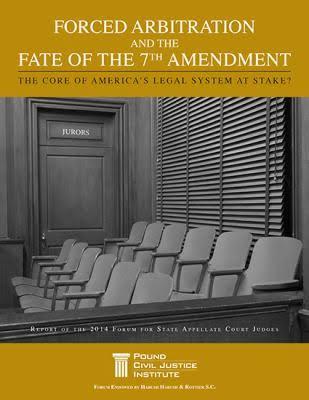
In honor of the 100th anniversary of the Federal Arbitration Act, this volume brings together a diverse group of leading scholars and practitioners to celebrate its successes and propose specific reforms. Readers will gain insight into how the Federal Arbitration Act impacts the modern practice of arbitration and how the Supreme Court’s interpretation of the Act undermines its fairness. Focusing on domestic, commercial and consumer, as well as securities and labor and employment arbitration, this book provides a roadmap to enhance the fairness and coherence of the Act. The volume is unique in that it serves as the impetus for a law reform project, with over thirty scholars speaking collectively for improvements to the law. More effective than scattershot arguments, this coordinated effort delivers a consistent message to a national audience: that arbitration has become ubiquitous and the law should ensure it is fair and equitable.
-

Voting Under State Constitutions
Wilfred U. Codrington III
Unlike their federal counterpart, state constitutions confer the right to vote in plain and affirmative terms. State charters also contain unique provisions that, among other things, regulate the redistricting process and set out the terms for political participation, including direct citizen lawmaking. And critically, state constitutions interact with the federal Constitution, which limits them in meaningful respects, while also governing the local administration of elections. Indeed, every political contest has aspects that are governed by state constitutions, making them an integral, yet underappreciated, source of American election law. This chapter underscores these and other crucial points by examining several dimensions of voting under state constitutions. It first lays out a broad history of voting under state charters. Then it provides a general overview of key structural components of state constitutions that govern the right to vote, followed by a brief assessment of two particularly important doctrinal matters explained in the context of particularly contested issues. Finally, the chapter closes by raising a few topics that would benefit from additional research and exploration to advance the scholarship in this ever-developing area of election law.
-

Die Prägung des Juridischen
Peter Goodrich and Serene Richards
Translated from the French by Katrin Becker
This collection of essays offers introductions to the work of the French legal historian and psychoanalyst Pierre Legendre, particularly to his development of "dogmatic anthropology." The multidisciplinary contributions elucidate the themes, concepts, and questions raised by Legendre, providing a multifaceted analysis of the work of this unique and indispensable contemporary thinker.
Legendre's work is immense, both in its scope (more than forty works) and its originality. It is a sophisticated exploration of the "language-endowed human animal" and society—understood as text. His reflections combine legal-historical, genealogical, philosophical, socio-theological, and psychoanalytic approaches into an extraordinary cultural anthropology, conceived as a reaction against the positivist thinking of a West dominated by "management." The aim of this anthropology is to uncover the foundations of the institutional system of Western culture and its historical origins.
-
Market Virtues and Respect for Human Dignity
Luís C. Calderón Gómez, Robert Talisse, and John A. Weymark
Luigino Bruni and Robert Sugden have provided a normative defense of markets from a virtue ethics perspective. They interpret market exchange as being a practice in the sense of Alasdair MacIntyre. For Bruni and Sugden, the telos of a market is mutual benefit and a market virtue is a character trait or disposition that contributes to the realization of this benefit. They regard market virtues as embodying a moral attitude towards market interactions that is characterized by reciprocity. For MacIntyre, this is a partial account of a virtue. To qualify as a virtue, it is also necessary that it contributes to the good of an individual’s life taken as a whole and to the social tradition in which both practices and individuals are embedded. We adopt MacIntye’s understanding of a virtue and consider the extent to which Bruni and Sugden’s account of market virtues is compatible with respecting the fundamental human good of dignity in Kant’s sense of this term.
-

Deconstructing Constitutional Identity in Light of the Turn to Populism
Michel Rosenfeld
Constitutional identity, although remaining distinct from national identity, does like the latter carve out an imagined community. It must process and reprocess material to promote a vision that integrates the ethnos and the demos in a constitutionally viable manner. In this pursuit, the elaboration of constitutional identity relies on three principal interpretive devices: negation, metaphor, and metonymy. The objective is to integrate the polity as a whole, the individuals subject to the constitution, and the plurality of groups within the nation that possess a legitimate claim to constitutional recognition. The resulting construct must draw on national identity to reinforce unity and depart from the latter where necessary to maintain constitutional integrity – e.g., to deescalate ethnic strife within the polity by banning ethnic-based political parties. The turn to populism poses a challenge that calls upon reframing constitutional identity. Indeed, as populism by its very nature casts only part of the people as the people, and labels those not included as the enemy, it calls for disaggregating and recombining existing liberal constitutional identities. We illustrate the adverse effect of populism’s recourse to ethnic cleavages and to religion in reframing constitutional identity through the salient example of Viktor Orban’s Hungary.
-
Antisemitism: A View From Within the Rabbinic Legal Tradition
Suzanne L. Stone
What does it mean to reflect on antisemitism and law? From an interdisciplinary perspective, the contributors examine the connections within this field of research for the first time. Approaches from diverse disciplines, including history, philosophy, sociology, literary studies, and law, fill initial gaps but also reveal problems, challenges, and areas for further study. Ultimately, this volume lays the foundation for a deeper understanding of antisemitism in legal scholarship and practice.
-

Chapter 18: Health in Conflict: International Humanitarian Law as Global Health Policy
Jocelyn Getgen Kestenbaum and Benjamin Mason Meier
-

Toward Pluralism in United States Intellectual Property
Michael J. Burstein
This chapter synthesizes from Dreyfuss’s scholarship a pluralistic vision of intellectual property law in the United States. This vision places positive law IP rights alongside non-IP innovation incentives in an institutional structure that allows both to thrive in various technological or creative contexts. Dreyfuss arrives at this vision by situating intellectual work in its larger technological and business, not merely legal, contexts. It is not bound by the distinctions among positive law IP rights and is sensitive to non-IP law that may impact innovation, and it pays close attention to institutional arrangements outside of IP that bear on innovation. This chapter concludes with two lessons from Dreyfuss’s approach. Methodologically, IP scholarship and policy would benefit from greater use of techniques that uncover context-specificity. Substantively, just as IP law itself might productively be thought to be technologically specific, so too might be the non-IP legal institutions that help shape innovation.
-
Chapter 5: Can’t Find the Remote? State Tax Issues Associated With a Dispersed Workforce
Jamie C. Yesnowitz, Eugene J. Gibilaro, and Edward A. Zelinsky
This article provides a primer on the state and local taxation of individuals; discusses the impact of a dispersed workforce on tax compliance for employees and employers, and addresses personal income tax concerns, employer nexus and apportionment issues, and additional practical concerns for employers. The article also analyzes the convenience of the employer rule, as well as state standards for nonresident (temporary) workers and their employers.
-

The International Crimes of Slavery and the Slave Trade: A Feminist Critique
Jocelyn Getgen Kestenbaum and Patricia Viseur Sellers
Existing from ancient times to today, slavery and the slave trade have spared neither females nor males, children nor adults. Sexualized violence through specific practices, such as inter alia concubinage and enslavement of eunuchs in harems, forced breeding of wenches and bucks, and the keeping of ‘fancy girls’ and bardaj boys, were integral to slavery and slave trades across the globe. This chapter offers a critical feminist lens to uncover and examine the sexual practices and sexualized violence inflicted upon the subjects of the 1926 Slavery Convention: the slaves. Examining the historic, gendered, and sexualized institutions of slavery and the slave trade facilitates a more complete understanding of the Convention’s legal definitions. Similar scrutiny of slave traders’ and slave owners’ economic needs and social customs further deduce the definitional scope of these crimes. The authors posit that the 1926 Slavery Convention’s definitions encompassed diverse gendered, sexualized norms that historically have permeated slavery and the slave trade, while observing the misguided use and desuetude of the crimes of slavery and the slave trade in the statutes of contemporary international judicial mechanisms. The authors conclude by advancing the application of distilled legal precepts to redress the sexually saturated and gender-based practices of slavery and the slave trade that persist today.
-

Chapter 33: Lessons
Richard H. Weisberg
Building on an earlier 'Three Lessons on Law and Literature', the author explores 'Every Word Counts'; 'But More So if We Permit 'Extrinsic Evidence'; and 'On Moral Fiction'. Each Lesson identifies the titular phrase's significance for both Law and Literature, arguing that the two narrative disciplines are indeed One. The sources encountered range from the Hebrew Bible and the New Testament - arguing that these two texts could not be more opposed both in letter and spirit and that the former has been usurped and manipulated beyond recognition by the latter - to Shakespeare. Ordinary cases from the law of Trusts and Estates, John Gardner's 'On Moral Fiction', and many other twentieth century American literary and legal theorists are criticized from this perspective.
-
Chapter 1: How Should Congress Respond to Jarvis? The Case for Letting States Experiment With Private Sector Retirement Savings Plans
Edward A. Zelinsky
The U.S. Supreme Court has ended the saga of Howard Jarvis Taxpayers Association v. California Secure Choice Retirement Savings Program by declining to review the decision of the U.S. Court of Appeals for the Ninth Circuit. By refusing to review this circuit court decision, the Supreme Court left intact that decision and its holding that ERISA does not block the CalSavers IRA program.
In the wake of these events, some urge the federal government to move into the space occupied by CalSavers and other state programs encouraging less affluent Americans to save for retirement. I instead propose that, the post-Jarvis world, Congress should eschew any mandate that private employers adopt IRAs or other retirement programs for their employees. The states should continue to experiment in this area rather than the federal government imposing a single national pattern. Different states will pursue different courses, thereby testing alternative possibilities. Experimentation by the states will provide information about diverse approaches.
To facilitate such experimentation by the states, the federal government should clarify two legal issues concerning state-run retirement programs for the private sector. First, employers covered by state-administered IRA programs should be permitted to make supplemental contributions to their employees’ IRAs without such employer contributions converting the state IRA program into an ERISA-governed arrangement. Second, employers not required by state law to participate in a state retirement plan for private sector employers should be allowed to voluntarily elect participation without such voluntary participation triggering ERISA coverage for the state plan.