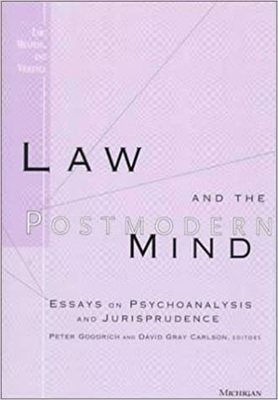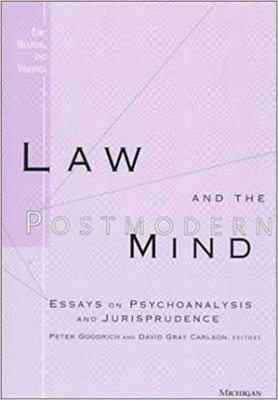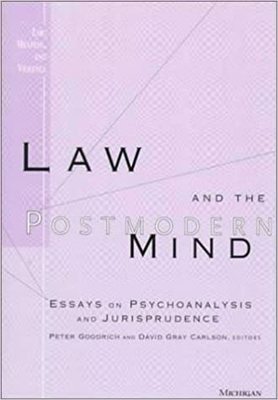

This collection contains book chapters authored by Cardozo Law faculty, including contributions to edited volumes and academic publications.
-
Media Relations in Criminal Corruption Cases
Jessica A. Roth
High-profile corruption cases often attract media scrutiny, as they involve matters of significant public interest. Cardozo Law Professor Jessica Roth provides guidance about how to balance the public’s legitimate interest in being informed with other important interests, including a defendant’s right to due process; the privacy and reputational interests of witnesses, subjects, and targets; and the integrity and effectiveness of ongoing investigations. She explores the requirements in the Model Rules of Professional Conduct, recent cases, and standards published by the U.S. Department of Justice, and suggests that offices develop thoughtful policies to guide public statements.
-
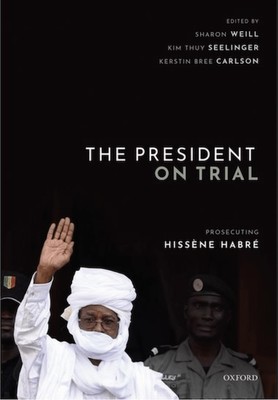
‘Sexualized Slavery’ and Customary International Law
Patricia Viseur Sellers and Jocelyn Getgen Kestenbaum
This chapter examines the doctrinal avenues for the recognition and prosecution of ‘sexualized slavery’. The Hissène Habré trial and appellate judgments represent watershed legal decisions rendering long-denied justice to victims of the brutal Chadian regime. Delayed charges of credible sexual violence inflicted upon both males and females challenged the judges of the Extraordinary African Chambers (EAC) in Senegal. Legal characterizations of sexual assaults ultimately attributed to Habré represent significant jurisprudential advancements on rape, sexual slavery, and torture as international crimes. The EAC's observations acknowledge that sexual slavery constitutes part of the actus reus of enslavement as crime against humanity and of slavery as a war crime. While agreeing with the Chambers that sexual slavery is anchored in customary international law, the chapter deepens the inquiry into the international legal prohibition of sexual slavery. It posits that, in fact, the 1926 Convention to Suppress the Slave Trade and Slavery (1926 Slavery Convention) proscribed what is identified as ‘sexual slavery’ because sexualized violence is and always has been part and parcel of both de jure (legal) and de facto (customary) forms of slavery.
-

Open Innovation and Ex Ante Licensing
Michael J. Burstein
Collaboration and sharing are critical to modern innovation environments, yet the conventional model of intellectual property is premised on the sole inventor. This chapter surveys the various institutional arrangements that challenge that premise—ex ante licensing, open innovation, user innovation, peer production, and knowledge commons. It argues that in innovation environments marked by collaboration, the common economic challenge is not sustaining incentives to innovate, as in the classic model, but overcoming barriers to information exchange. Intellectual property can, in some circumstances, facilitate the diffusion of information. But the role that IP plays in collaborative environments is complex and context-specific, as the existing empirical studies of open innovation and its variants have revealed. This suggests that intellectual property policy ought to be pluralistic, allowing for the development of a variety of institutional solutions to the challenges of collaboration.
-
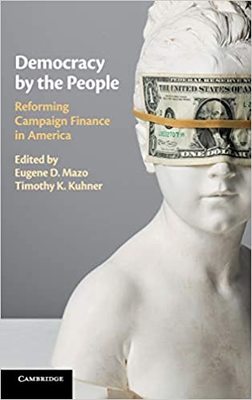
Reorienting Disclosure Debates in a Post-Citizens United World
Katherine A. Shaw
Disclosure is often an afterthought in debates about money in politics. Reformers have tended to take disclosure for granted, devoting little time to developing and refi ning the affi rmative case for it. They have also tended to assume that the current disclosure regime is an effective one, at least as far as it goes. Reformers have devoted substantial attention to the holes in the current regime in the post- Citizens United era— so- called “dark” and “gray” money 1 — and have considered ways to bring such activity into the light. Yet even if they are successful, such expansion efforts would only bring more dollars under the auspices of a disclosure regime in need of both stronger conceptual architecture and substantial practical improvements. So closing the gaps in the system is only one aspect of the task.
-

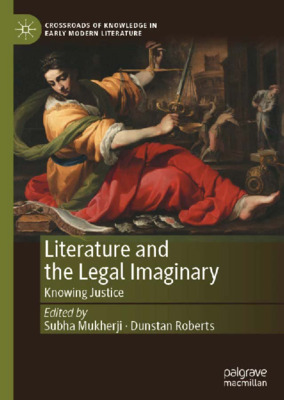
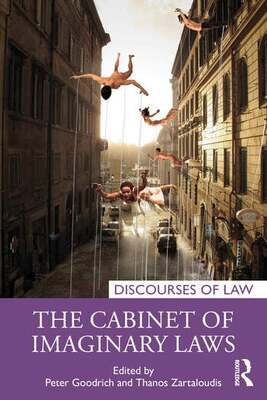
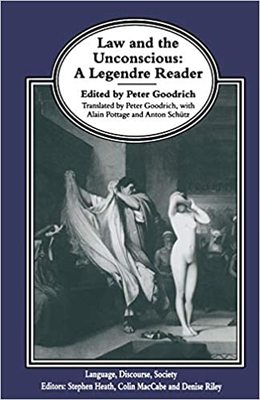
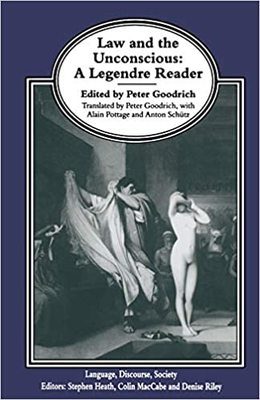
Pictures as Precedents: The Visual Turn and the Status of Figures in Judgments
Peter Goodrich
Contemporary expansion of the use of images, photographs, film, animation and other visual media in legal argument has given rise to a practice and subdiscipline of visual advocacy. Less studied and commented on, this scopic dimension to legal practice has also resulted in an increasing use of images in judicial decisions. Recent case law provides examples of an image of an ostrich with its head buried purportedly remonstrating against failure to cite binding precedent, a smiling emoji in a decision relating to child custody, numerous splash pages and online order icons in cases relating to consumer purchases over the net, and many further instances of pictures coming to play the law. This chapter directly addresses the role of the eye and the impact of the visual upon the reasoning of judgments, as also on the status and import of precedents that include pictures.
-

There’s No Such Thing as Interpreting a Text
Martin J. Stone
Positively, this chapter sets out various structural differences between literary and legal interpretation. Negatively, it criticizes views of legal and literary interpretation that attempt to derive their features from an account of interpretation-in-general. The thesis that a successful interpretation always recovers an author’s intention is specifically rejected. A “naïve” view of interpretation is defended—the one that appears when we are sunk in practical activity—as opposed to theories of interpretation (e.g., “postmodern” ones) that tend to picture it as ubiquitous and endless.
-

Four Qualms About Legal Pragmatism
Martin J. Stone
An invitation from Professors Graham Hubbs and Douglas Lind to participate in a panel on “Legal Pragmatism” left me feeling gratefully surprised: surprised, because I have never called myself a “legal pragmatist” or found inspiration in the jurisprudential work that embraces that label; but grateful, too, because I welcomed the opportunity to formulate my sense of why “legal pragmatism” is mostly useless in thinking about law, and to do so, moreover, against the background of statements from colleagues I admire concerning what they find significant in pragmatist thought. The following remarks are the upshot of that occasion. I will try to identify my basic qualms about legal pragmatism under four headings: (1) empty eclecticism, (2) reductive instrumentalism, (3) “the primacy of practice,” and (4) the metaphysically preservative recoil.
-
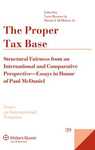
Tax Reform Paul McDaniel Style : the Repeal of the Grantor Trust Rules
Laura E. Cunningham and Noël B. Cunningham